You're confused by the terms "foam gun1" and "foam cannon2." You buy one expecting thick, shaving-cream foam but end up with watery suds.
A foam cannon2 uses a high-pressure washer3 to create very thick foam4. A foam gun1 connects to a standard low-pressure garden hose5 and creates a lighter foam. The key difference is the pressure source6, which directly impacts the foam's thickness.
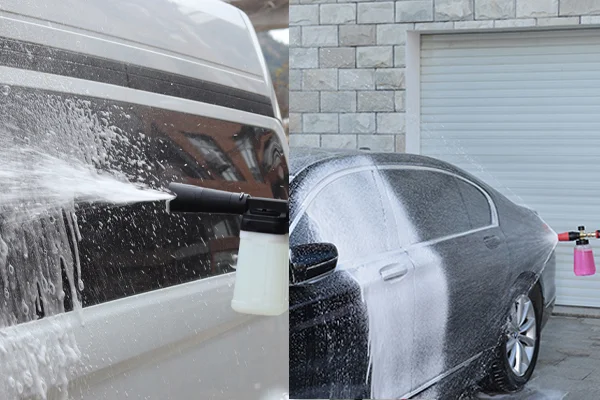
My distributors ask me this all the time. They say, "Is there any way to make a low-pressure foam gun7n](https://www.youtube.com/watch?v=uMdZ335LJYI)%%%FOOTNOTE_REF_1%%%, the kind that connects to a garden hose5, create foam as thick as a high-pressure cannon?" It's the golden question in car washing8. As a manufacturer, my team and I have spent countless hours exploring this. We've taken apart everything from hand soap dispensers that make sponge-like foam to electric pump sprayers that use air pressure to create a fine mist. We understand the physics of foam. I want to walk you through what we've learned and show you why both tools have a place, and how we've made the simple garden hose5 foam gun1 better than ever.
How does a high-pressure foam cannon2 create such thick foam4?
Are you chasing that super-thick foam4 you see in professional detailing9 videos? You try to replicate it, but your suds are thin and run right off the car.
The secret is extreme pressure combined with a special filter. A foam cannon2 requires a pressure washer, which forces the water and soap mixture through a dense stainless steel mesh filter10. This violent process creates incredibly thick, dense foam that clings to surfaces.
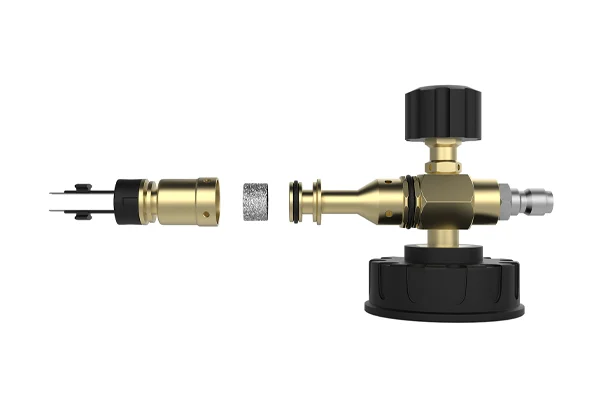
To really understand this, you need to think about the journey the soap takes. It starts in the bottle. The pressure washer shoots water through the cannon at anywhere from 800 to 4000 PSI. This creates a vacuum that sucks the car wash soap11 up through a small tube. Now, the high-pressure water and the soap are mixed. Here comes the most important part: this mixture is forced through a tightly packed ball of stainless steel mesh. Imagine trying to force honey through a screen door at high speed. The mixture is churned, agitated, and blasted through these tiny openings. When it finally sprays out of the nozzle, the foam is thick, rich, and dense. It has to be; it has survived an intense process.
The Key Components of High-Pressure Foaming
Let's break down the system.
- Pressure Washer: This is the engine. It provides the 800-4000 PSI of force needed. A garden hose5 simply can't do this.
- Venturi System: This is the part that uses the high-speed water to suck soap into the stream.
- Foam Agitator: This is the hero. The stainless steel mesh filter10 is what aerates the mixture to the extreme, creating the thickest foam possible.
Here is how these parts work together:
| Component | Role in the System | Result |
|---|---|---|
| Pressure Washer | Provides extreme force | Powers the entire process |
| Foam Cannon Body | Mixes water and soap | Creates the initial sudsy mixture |
| Steel Mesh Filter | Violently aerates the mixture | Transforms suds into thick, clinging foam |
Without all three of these elements working together, you simply cannot achieve that professional-grade, shaving-cream-like foam.
Why can't a garden hose5 foam gun1 make the same foam?
You bought a garden hose5 foam gun1 expecting it to perform like a cannon. Now you're disappointed that the foam isn't as thick as you hoped.
It all comes down to pressure. A garden hose5 only provides about 40-80 PSI (2.5-6 Bar). That's not nearly enough force to push a soap mixture through a dense mesh filter. So, foam gun1s use a much simpler, less restrictive method to create foam.
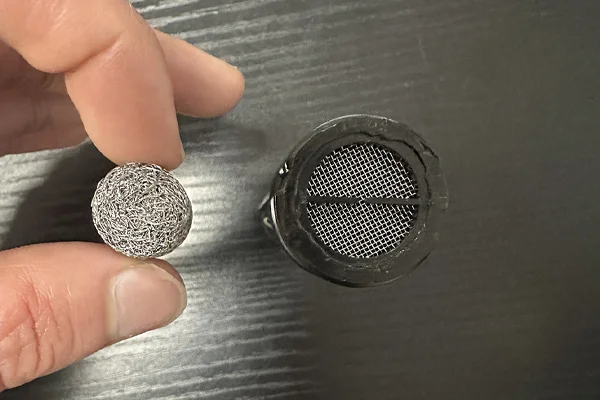
Honestly, the foam from a low-pressure gun can't be identical to a high-pressure one. The science doesn't allow it. The pressure from a garden hose5 is less than a tenth of what even a basic pressure washer produces. Because of this, we can't use that same steel mesh filter10. The water would barely trickle out. Instead, the foaming mechanism in a garden hose5 gun is usually just a simple tube or a much less restrictive screen. The soap and water mix, but they aren't forced together under extreme pressure. The foam is created, but it doesn't go through that "heavy struggle" that makes high-pressure foam so dense. It comes out much wetter and runnier.
The Trade-Off: Convenience Over Foam Thickness
So, if the foam isn't as good, why would anyone choose a foam gun1? The answer is simple: convenience.
- No Pressure Washer Needed: This is the biggest advantage. You don't need to buy, store, or set up a heavy machine.
- No Electricity: You can wash your car anywhere your garden hose5 can reach, without worrying about finding an outlet.
- Simple and Fast: You just click it onto your hose and go. The entire process is incredibly straightforward.
Knowing we couldn't match the foam thickness, my team and I decided to perfect everything else about the low-pressure foam gun7n](https://www.youtube.com/watch?v=uMdZ335LJYI)%%%FOOTNOTE_REF_1%%%. If we couldn't win on foam density, we would win on user experience12. We improved the dial for adjusting the foam ratio13, making it smoother and more precise. We completely redesigned the nozzle to allow for angle and direction adjustments. The old models were fixed; our new ones let you switch from a jet to a fan, and from horizontal to vertical, with a simple twist. The feel and function are far superior to older models.
So, which one is right for you?
Are you stuck trying to decide between the two? You want great results but also want a tool that's easy and practical for you to use.
Choose a foam cannon2 if you already own a pressure washer and want the absolute thickest foam possible for professional-level results. Choose a foam gun1 if you value convenience, speed, and a simple setup using just your garden hose5.
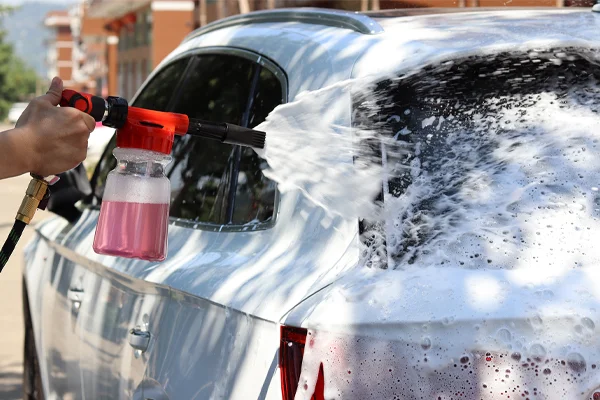
As a supplier, my job is to provide solutions. For the professional detailer or the hardcore enthusiast, the high-pressure foam cannon2 is the right tool. We manufacture those to the highest standards. But for the vast majority of people who just want a better, safer, and faster way to wash their car on a Saturday morning, the garden hose5 foam gun1 is the perfect answer. It's a massive upgrade from the old bucket and sponge method. It provides plenty of foam to lift dirt safely and makes the whole process much more enjoyable. It is the practical, everyday solution.
A Supplier's Perspective
From my position as a manufacturer, I see the whole market.
- High-Pressure Foam Cannons: These are for a niche but dedicated market. They demand performance above all else.
- Low-Pressure Foam Guns: This is the tool for the masses. The potential market is huge because nearly every home has a garden hose5.
This is why we have invested so much in improving the low-pressure foam gun7n](https://www.youtube.com/watch?v=uMdZ335LJYI)%%%FOOTNOTE_REF_1%%%. By adding features like the adjustable nozzle and directional spray, we've made it a much more powerful and compelling tool. We provide our distributors with a product that isn't just a "lesser" version of a foam cannon2, but a fantastic tool in its own right, designed for a different kind of customer. We believe in giving people the right tool for the job.
While foam gun1s and cannons differ in foam thickness due to pressure, the modern foam gun1 offers incredible convenience and advanced features, making it the perfect choice for most home users.
Learn about foam guns and their advantages for casual car washing compared to foam cannons. ↩
Explore this resource to understand the mechanics behind foam cannons and why they produce thick foam. ↩
Discover how high-pressure washers function and their role in creating thick foam for car washing. ↩
Find tips and techniques for achieving that professional-grade thick foam for your car. ↩
Explore the effectiveness of using a garden hose for car washing and its limitations. ↩
Understand the importance of pressure in foam production and how it impacts cleaning effectiveness. ↩
Explore the advantages of low-pressure foam guns for home users and casual car washing. ↩
Find best practices for effective car washing at home, including foam techniques. ↩
Discover the role of foam in professional detailing and how it enhances the cleaning process. ↩
Understand the significance of steel mesh filters in creating thick, clinging foam. ↩
Find out which car wash soaps work best with foam cannons for optimal foam production. ↩
Learn about innovations in foam guns that enhance user experience and convenience. ↩
Learn how to effectively adjust the foam ratio for better cleaning results with foam guns. ↩