You bought a foam cannon1, but the foam is watery and weak. You blame the cannon or the soap, feeling disappointed. The real problem might be a tiny, mismatched metal part inside.
The key difference is how they work with your pressure washer2. The smaller 1.1mm orifice3 is best for lower-power home washers (800-1500 PSI) to build pressure for thick foam4. The larger 1.25mm orifice5 is for powerful washers (2000+ PSI) to allow proper water flow6 and prevent damage.
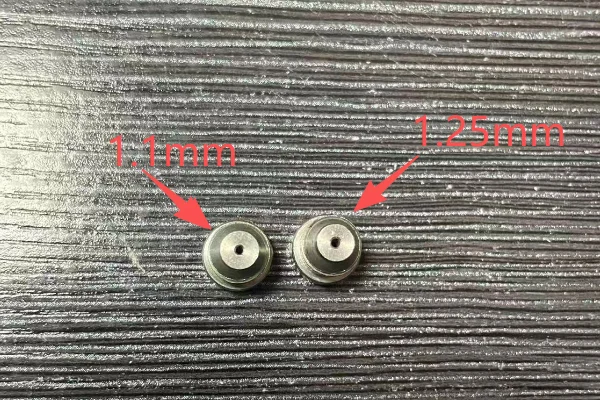
On the surface, it's just a 0.15mm difference. It seems so small. But in the world of high-pressure water7, this tiny change makes all the difference. As someone who has manufactured these parts for over a decade, I've seen this small detail make or break a customer's car wash experience8. I once had a client who was convinced his new pressure washer2 was faulty because it kept shutting off. The real issue was the orifice in his foam cannon1. It’s not just about the size of the hole. It's about matching that hole to your entire system. Let's break down what each size really means for you.
When should you use the 1.25mm orifice5?
You have a powerful pressure washer2, but your foam cannon1 makes the machine stutter. You worry your new washer is already broken, a frustrating and potentially expensive problem right from the start.
Use the 1.25mm orifice5 with a high-power pressure washer2, typically one rated for 2000 PSI or more. The larger opening allows for greater water flow6. This prevents excessive back-pressure9 that can cause the machine to stutter or overheat.
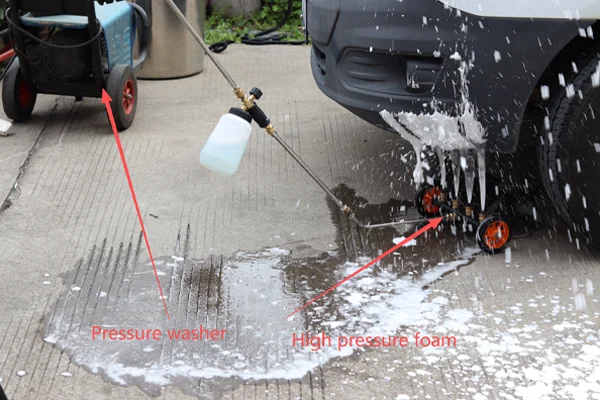
The 1.25mm orifice5 is designed for systems with high performance. Think of it like a sports car that needs premium fuel to run correctly. This orifice needs two things: high pressure (PSI) and high water flow6 (gallons per minute, or GPM10). When both conditions are met, the results are fantastic. You get a huge volume of foam sprayed with great force. But there's a catch. If your setup doesn't meet its demands, performance drops dramatically. Using it with a weaker, 800 PSI washer won't create thick foam4 because the pressure isn't strong enough. More importantly, if your water supply can't provide enough GPM10, the pressure washer2 pump runs dry for a split second. This causes the start-stop stuttering that many people mistake for a machine defect. The machine is actually protecting itself.
Matching the 1.25mm Orifice to Your System
This orifice is for a specific type of setup.
| Requirement | Why it's Needed for the 1.25mm Orifice |
|---|---|
| High PSI (2000+) | Provides the necessary force to push a large volume of water through the wider opening and create good foam. |
| High GPM10 | Ensures the pump has a constant supply of water, preventing it from running dry and causing the machine to stutter or shut down. |
| Proper Setup | When both PSI and GPM10 are high, the 1.25mm orifice5 allows the system to run smoothly, delivering excellent foam volume and coverage. |
In my factory, we test these combinations constantly. The 1.25mm orifice5 on a powerful machine is a perfect match, but it's a terrible mismatch on a standard home unit.
Why is the 1.1mm orifice3 better for home use?
You just want to wash your car at home with your standard pressure washer2. You see all these options and worry about buying the wrong part, getting bad results, or even breaking your equipment.
The 1.1mm orifice3 is ideal for most home pressure washer2s, which typically operate between 800 and 1500 PSI. Its smaller opening concentrates the lower pressure, creating a strong jet that produces thick, clinging foam without straining the machine.
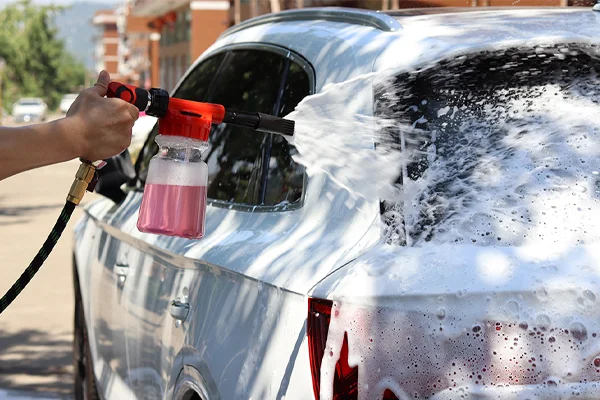
Most homes have standard water pressure and electrical outlets. This means the pressure washer2s designed for home use are built to work within these limits. They have a moderate PSI and GPM10. The 1.1mm orifice3 is engineered specifically for this environment. It acts like putting your thumb over a garden hose. By constricting the flow, it increases the water's velocity. This speed creates a strong vacuum to pull soap into the stream and whip it into thick foam4, even with just 800 PSI. The requirements are much lower and easier to meet. You don't need a special water supply or a high-powered machine. This makes the 1.1mm orifice3 the default, reliable choice for the vast majority of car enthusiasts11 washing their cars in their own driveways. It's the most common size for a reason: it just works.
The 1.1mm Orifice: The Reliable Choice
It is designed to be forgiving and effective in a typical home setting.
- Low Requirements: It works perfectly with the PSI and GPM10 of standard home pressure washer2s. You don't need to worry if your water pressure is high enough.
- Pressure Concentration: The small opening is the key. It takes the moderate pressure from your machine and turns it into a high-velocity stream needed for foam generation12.
- Plug-and-Play: For most users, a foam cannon1 equipped with a 1.1mm orifice3 will work perfectly right out of the box with no modifications needed.
I always advise my distributor clients to stock 1.1mm as the standard. It provides the best experience for the largest number of customers and leads to fewer complaints about "broken" machines.
What happens if I use the wrong orifice for my machine?
You've mismatched your orifice and pressure washer2. Now your foam is either thin and useless, or your machine is making scary noises and shutting off. You're frustrated and can't figure out what's wrong.
Using the wrong orifice creates a system imbalance. A 1.25mm on a weak washer produces watery foam. A 1.1mm on a powerful washer creates extreme back-pressure9, causing the machine to stutter, overheat, or even suffer permanent damage.
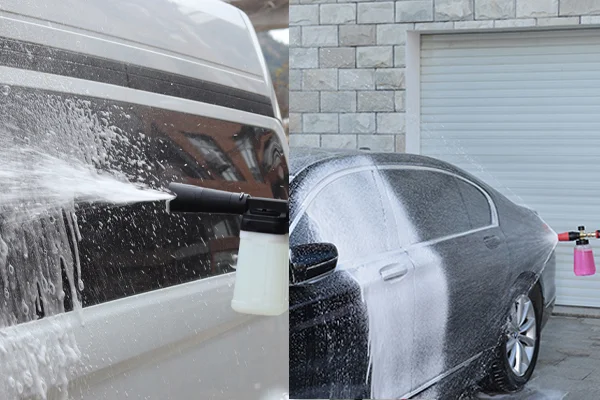
Let's break down the two failure scenarios. They are opposites, but both lead to bad results. In my years of developing cleaning products13, I've seen both happen countless times. First, imagine using the big 1.25mm orifice5 with a small 1000 PSI washer. The pressure is too low to force water through the wide opening with enough speed. The result is a weak stream that can't create the vacuum needed to mix soap and air properly. You get bubbly water, not thick foam4. Now, imagine the second, more dangerous scenario. You use the small 1.1mm orifice3 with a powerful 3000 PSI washer. The pump is trying to force a huge amount of water through a tiny hole. This creates a traffic jam of pressure inside the system. The back-pressure9 skyrockets, putting immense strain on the motor and pump, which can cause it to burn out.
Diagnosing the Mismatch
Use this table to understand what's happening.
| Your Machine | Orifice Used | The Result You See | The Reason |
|---|---|---|---|
| Low PSI (800-1500) | 1.25mm | Watery, weak foam. | Not enough pressure to create a strong jet. |
| High PSI (2000+) | 1.1mm | Machine stutters, stops. | Extreme back-pressure9 puts strain on the motor. |
| Any PSI | Correct Match | Thick foam, smooth operation. | The system is balanced and working as designed. |
Checking this tiny part is the number one troubleshooting step I recommend. A simple orifice swap, which costs only a few dollars, can completely transform your results and save you from thinking you need a new pressure washer2.
Conclusion
Choosing the right orifice is critical. Use the 1.1mm for standard home washers (800-1500 PSI) and the 1.25mm for powerful washers (2000+ PSI) to ensure perfect foam and protect your equipment.
Get insights into foam cannons and how they enhance the car washing experience. ↩
Explore how pressure washers interact with foam cannons to create thick foam for effective cleaning. ↩
Learn how the 1.1mm orifice is designed for home use and why it's the best choice for most users. ↩
Discover tips and techniques to ensure you get the thick foam you desire for your car wash. ↩
Understanding the 1.25mm orifice can help you optimize your foam cannon for high-pressure washers. ↩
Understanding water flow can help you choose the right orifice for your pressure washer setup. ↩
Learn about the role of high-pressure water in creating effective foam for cleaning. ↩
Explore ways to enhance your car wash experience with the right equipment and techniques. ↩
Understanding back-pressure can help you avoid damaging your equipment during use. ↩
Learn about gallons per minute (GPM) and its importance in pressure washer performance. ↩
Discover essential tips for car enthusiasts to achieve the best results with foam cannons. ↩
Learn the science behind foam generation to optimize your cleaning process. ↩
Explore top cleaning products that work effectively with foam cannons for superior results. ↩