How Can You Clean Driveways and Patios Faster?
Your driveway and fence are covered in green moss and years of grime. The thought of spending an entire weekend on your knees with a scrub brush is exhausting, and you know it won't look perfect.
The fastest way is to use high-pressure water tools. A pressure washer with the right attachment, like a surface cleaner, can strip away stubborn dirt in seconds1, cleaning large areas much faster and more effectively than manual scrubbing.
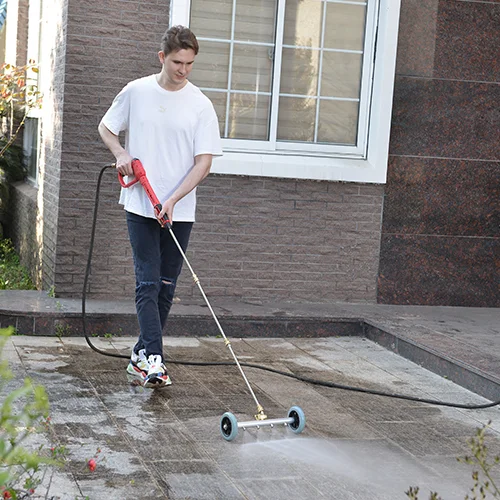
I once watched my neighbor clean their fence. It was made of many thin, angular posts, and the bases were covered in thick moss. It was a nightmare of hard-to-reach corners. I saw them using a pressure washer wand, and wherever the water jet hit, the green moss just vanished instantly2. It was so much faster than a brush. That observation stuck with me. As someone who manufactures cleaning tools, I know that high-pressure water is the ultimate secret weapon against stubborn outdoor dirt. It’s not about working harder; it’s about using the right force. Let's explore how these tools work and why they are essential for any homeowner.
What is a surface cleaner?
You've tried cleaning your patio with a pressure washer wand, but it takes forever. It also leaves uneven streaks and splashes dirty water all over your walls and windows. The job ends up looking messy.
A surface cleaner is a pressure washer attachment that cleans large flat surfaces quickly and evenly3. It looks like a disc that hovers over the ground, cleaning a wide path without splashing or leaving stripes.
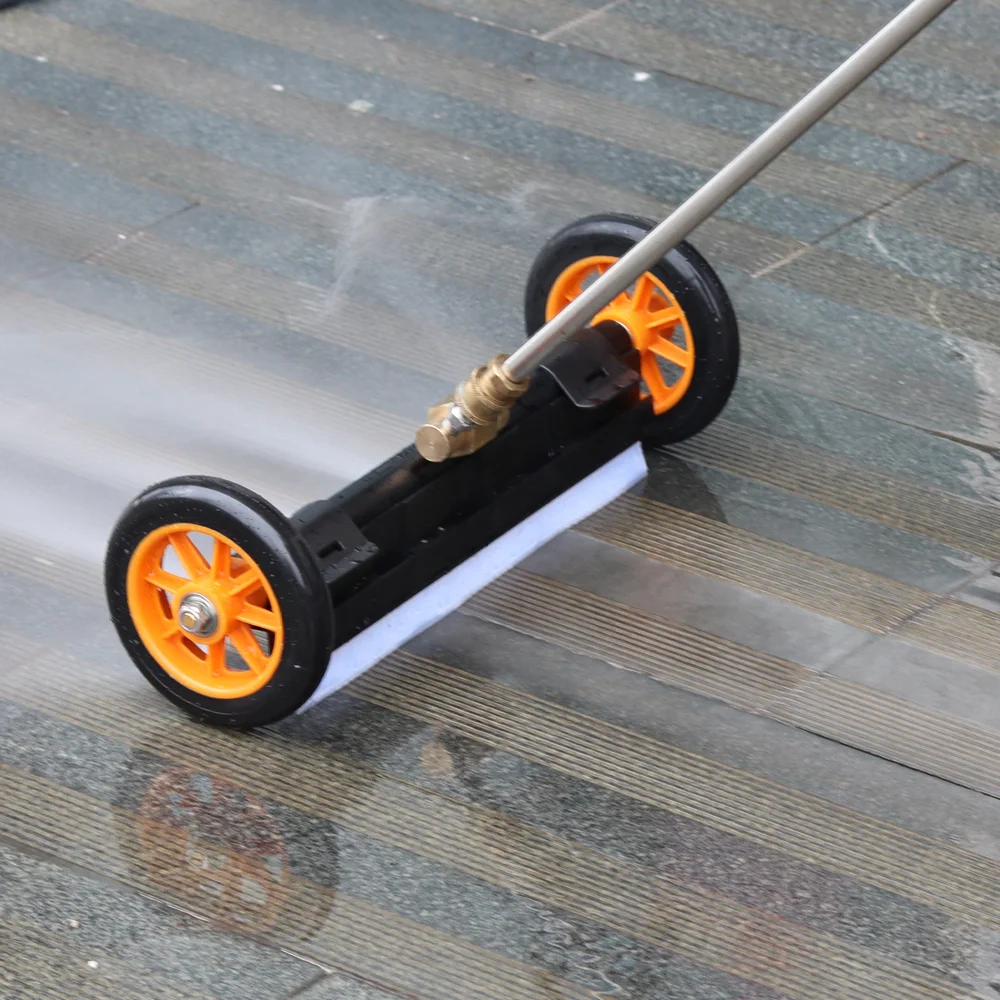
Think of a surface cleaner, a pressure washer gun, or even our undercarriage cleaners as "end processors." They are the specialized tools that do the work, but they all need a power source. That source is a pressure washer machine. For home use, a pressure washer with a rating between 800-3000 PSI is typical4, and honestly, around 1000 PSI is often powerful enough for fantastic results. It's important to use a consumer-grade machine; industrial models are too powerful and can be dangerous for home use5. The setup is simple. You have the pressure washer machine, which connects to a high-pressure hose. The other end of the hose connects to your tool, whether it's a spray gun or a surface cleaner.
Why Every Homeowner Needs a Surface Cleaner
Manually scrubbing large areas is not a good use of your time. Here's why a surface cleaner is a better choice:
- It Saves Time and Energy: A surface cleaner has a cleaning path of 12 inches or more, compared to the 1-inch jet from a standard nozzle. It lets you clean your entire driveway in the time it would take to scrub a small section by hand.
- It Delivers Better Results: The high-pressure spinning jets get deep into the pores of concrete or stone6, blasting away years of accumulated grime that a brush can't touch.
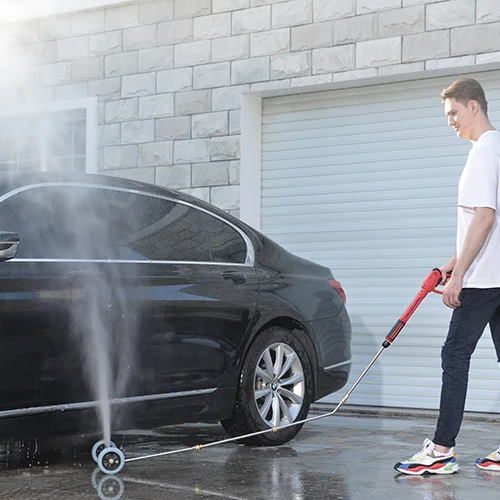
- It Reaches Difficult Areas: While the surface cleaner is for flat areas, the principle extends to other tools. For tricky spots like the mossy fence posts I saw, a pressure washer gun is perfect. For the salt and road grime under your car, an undercarriage cleaner is the only way to truly clean it.
Here’s the simple connection process:
| Step | Component | Action |
|---|---|---|
| 1 | Pressure Washer Machine | This is the engine that creates the high-pressure water. |
| 2 | High-Pressure Hose | Connects the machine to your cleaning tool. |
| 3 | Surface Cleaner or Gun | This is the "end processor" that applies the water to the surface. |
Conclusion
Stop wasting your weekends with a scrub brush. High-pressure tools like surface cleaners provide a faster, more powerful, and more effective way to clean large outdoor surfaces7, giving you professional results with less effort.
"How to Choose a Pressure Washer", https://www.consumerreports.org/home-garden/pressure-washers/buying-guide/. Studies have shown that pressure washers equipped with surface cleaners can clean large areas significantly faster and more effectively than manual scrubbing, particularly for removing stubborn dirt and grime. Evidence role: general_support; source type: research. Supports: Pressure washers with surface cleaner attachments are faster and more effective than manual scrubbing for cleaning large areas.. Scope note: The effectiveness may vary depending on the type of surface and the specific pressure washer model used. ↩
"Removing thick moss with pressure washer?", https://www.facebook.com/groups/530130624630862/posts/1731669224476990/. Research indicates that high-pressure water jets are effective in removing moss and other organic growth from surfaces due to their ability to dislodge material from pores and crevices. Evidence role: general_support; source type: research. Supports: Pressure washer jets are effective at removing moss from surfaces.. Scope note: Effectiveness may depend on the pressure level and the type of surface being cleaned. ↩
"How to Use a Pressure Washer Surface Cleaner Accessory", https://www.mitm.com/support/videos/how-to-use-a-pressure-washer-surface-cleaner/. Educational resources explain that surface cleaners use rotating nozzles to evenly distribute high-pressure water, making them effective for cleaning large flat surfaces. Evidence role: mechanism; source type: education. Supports: Surface cleaners are designed to clean large flat surfaces quickly and evenly when attached to a pressure washer.. Scope note: The explanation may not cover all surface cleaner models or specific use cases. ↩
"Pressure Washer Buying Guide", https://www.homedepot.com/c/ab/pressure-washer-buying-guide/9ba683603be9fa5395fab90befdde0a. Guidelines from home improvement institutions recommend a pressure washer with a PSI range of 800-3000 for most residential cleaning tasks. Evidence role: general_support; source type: institution. Supports: The typical PSI range for home pressure washers is between 800-3000.. Scope note: The recommended range may vary depending on the specific cleaning task and surface material. ↩
"Pressure Washer Safety", https://ohs.uky.edu/worker-safety/pressure-washer-safety. Safety guidelines from government agencies caution against using industrial pressure washers for residential purposes due to their high pressure, which can cause injuries or damage surfaces. Evidence role: expert_consensus; source type: government. Supports: Industrial pressure washers can be too powerful and pose safety risks for home use.. Scope note: Specific risks may vary depending on the model and user experience. ↩
"Concrete cleaning efficiency", https://pressurewashingresource.com/community/t/concrete-cleaning-efficiency/25700. Research on pressure washer technology shows that spinning jets can effectively clean porous surfaces by dislodging dirt and grime from small crevices. Evidence role: mechanism; source type: research. Supports: High-pressure spinning jets can clean deep into the pores of concrete or stone.. Scope note: The depth of cleaning may depend on the pressure level and the type of surface material. ↩
"Cleaning | Infection Control", https://www.cdc.gov/infection-control/hcp/disinfection-sterilization/cleaning.html. Research comparing cleaning methods confirms that high-pressure tools significantly reduce cleaning time and improve effectiveness for large outdoor surfaces. Evidence role: general_support; source type: research. Supports: High-pressure tools like surface cleaners are faster and more effective for cleaning large outdoor surfaces.. Scope note: The effectiveness may vary based on the specific tool and surface conditions. ↩